JP Morgan & CHASE

Automated customer account transfer

Company
JP Morgan & Chase
Role
Design Lead and Product Manager
Duration
Q1 of 2019 to Q3 of 2021

Overview

JP Morgan Chase's Automated Customer Account Transfer (ACAT) platform is the primary way customers transfer investment assets from external institutions into Chase accounts. Since launching in August 2017, the platform processed over 2,000 account opening requests monthly—but also generated 500+ complaints in just 4 months. Leadership saw a strategic opportunity to rebuild the experience and reduce friction across all service channels.

What I did

  • Worked with research lead and product owners to map out the existing account transfer online experience and identify the business opportunities, as well as KPIs and ROIs.
  • Identified the pain-points/opportunities with the customer feedback & analytics team.
  • Led UX/UI efforts from ideation to development.

My impact

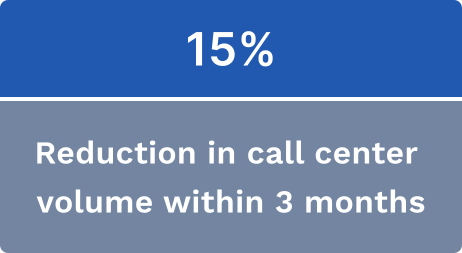
  • Reduced the call center volumes by 15% in the course of 3 months after the launch of new design.
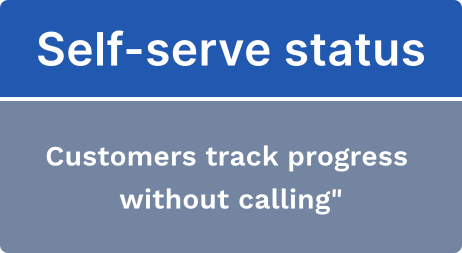
  • Received fewer complaints from customers about where they stand in the transfer process.
  • Increased visibility to other LOBs on possible future initiatives on the roadmap.

Why This Matters

ACAT is a tool that lets customers move their investments (stocks, bonds, retirement accounts) from other brokerages like Fidelity or Schwab into their Chase account—without paperwork, phone calls, or branch visits.

An analogy: Imagine trying to transfer money between banks, but instead of a few clicks, you have to download a PDF, fill it out by hand, mail it in, and then wait days with no idea if it worked. That was the ACAT experience.

ACAT isn't just a feature—it'sthe front door for capital inflow. Every friction point directly impactsChase's ability to acquire assets under management and protect its reputationas a trusted institution.

The Problem

From customer feedback andanalytics, we identified four core issues:

The result: Call volume at the call center increased drastically as customers didn't know the status of their transfer or where they stood. The experience was broken.

My Role & Approach

I served as Lead Designer and Product Manager, working across four key stakeholder groups: ProductOwners, Customer Feedback & Analytics, Operations, and Tech.

Before jumping into design, I partnered with the research lead and analytics team to define experience benchmarks. We developed a KPI framework based on four strategic questions:

  1. What's the average time for customers to complete the process?
  2. What's preventing customers from completing the online request?
  3. What drives customers to call the call center, and what are their complaints?
  4. Why do customers drop off the digital experience?

This led to a dual-track measurement framework:

This led to a dual-trackmeasurement framework:This framework gave us shared success criteria before we built anything—and allowed us to measure post-launch impact against real benchmarks, not just gut feel.

After exploration research with stakeholders, I partnered with product and tech to brainstorm 14 opportunities. We assessed them based on customer pain-points, tech constraints, and budget—then narrowed to 4 action items for 2019:

Design and launch MVP

Based on the prioritized action items, I worked with the product team to propose a solution that would allow customers to connect to their external institution and submit a request online – this would eliminate the pain points of submitting documents to initiate the transfer. I worked with the development team to implement the design in a bi-weekly agile fashioned sprint in the course of 6 months.

Some constraints were encountered as we built the ideal tracking experiences for users to track their transfer statuses (e.g. technical limitations, development time).

ACAT - confirmation redesign comparison

Aside from the constraints, the example below illustrates how customer frustrations were minimized with the updated online experience.

Tarmac - Updated Media page view

Below are a few additional finalized designs in the transfer asset journey.

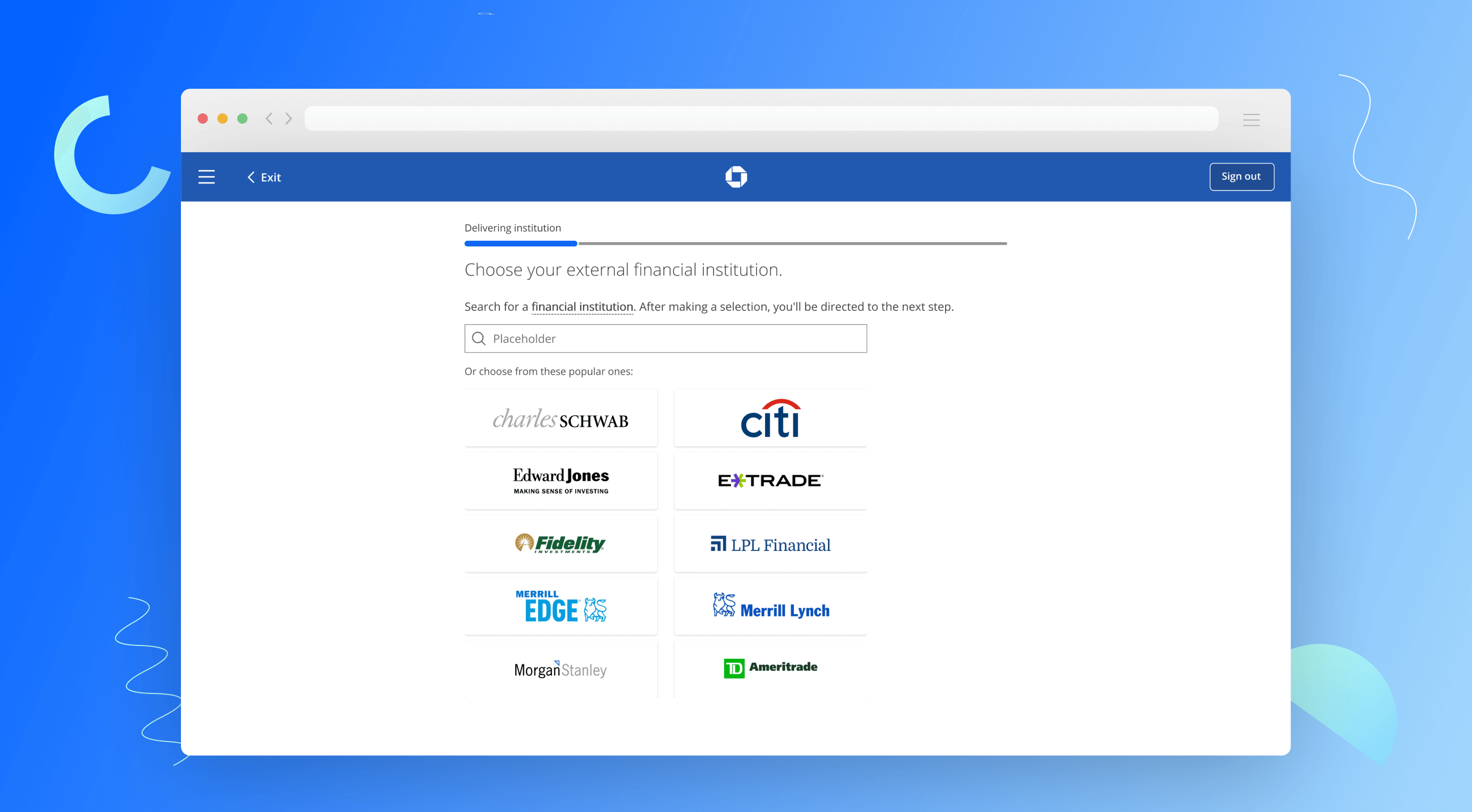
Select financial institution
  1. Progress bar design illustrate where users are before completing the task
  2. Search bar allows users to search for any financial institution that could require offline submission
  3. Integrating third party service API to allow users to select the "popular institutions" to began online transfer
Painpoints to solve
  1. Wayfindings and setting expectations for users to know what to expect
  2. Showcasing the "online option" for users to process their transfer, first time ever

Specify the assets to transfer
  1. Allow users to select type of transfer in ease
  2. Allow users to identify the assets vs. cash to transfer. They can specify the quantity of the positions in the following step
Painpoints to solve
  1. Users don't need to wait for the manual process to kick in, they can directly do it themselves
  2. Showcasing the available assets to users, without calling their financial institution to inquire further information
Confirmation page
  1. Adding additional iconography and clear instructions to notify users what they can expect next
  2. Setting expectations of additional taxations and durations for transfer to complete
Painpoints to solve
  1. Clear guidance of what's coming up in the transfer process
  2. Notifying users that there're might be additional costs and time for transfers to initiate and complete

Impact and conclusion

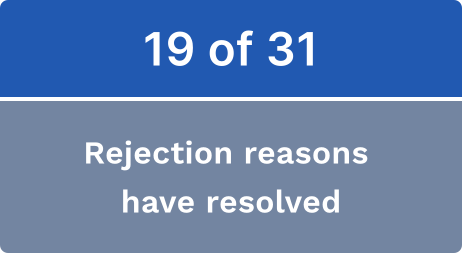
The MVP was able to resolve 19 rejection reasons, out of 31 total reasons. It also reduced the call volume by 15% at the call center in the course of 3 months. As we receive more analytics in the coming months, we’ll be able to compare it with the benchmarks. Meanwhile, I am putting the efforts collectively with our stakeholders on other initiatives for ongoing improvement for the year 2021 and beyond.

Deliverables

  • Service design blueprint
  • Business strategy prioritization map
  • KPIs and ROIs strategy documentation
  • CX screen flow diagram
  • Invision prototype with full-specs